
Halloween parties demand drinkware that looks good under themed lighting, survives crowded rooms, and stays within budget. For importers, wholesalers, party-supply distributors, event planners, and retail buyers, the choice is rarely just about the lowest unit price. Appearance, real-world durability, total landed cost, and compliance all matter.
According to the National Retail Federation's 2026 Halloween survey, U.S. consumers are expected to spend $13.5 billion on the holiday, up from $13.1 billion the previous year. That scale creates strong seasonal demand for party drinkware, but it also raises the cost of stockouts, over-ordering, and post-season leftovers. The practical question for buyers is straightforward: how do you select plastic wine glasses and related drinkware that deliver visual impact, hold up during events, meet regulatory expectations, and still leave room for margin?


Halloween Market Trends and the Risks of Seasonal Purchasing
The NRF data shows consumers remain committed to the holiday while watching their budgets carefully. Many start shopping early, compare prices, look for sales, and favor items they can reuse. For suppliers of plastic drinkware, this environment favors products that feel premium enough for themed parties yet remain practical and cost-controlled.
Seasonal purchasing carries familiar risks. Ordering too late can mean missing peak sales windows or paying rush freight. Ordering too early or too aggressively can leave excess inventory after October 31. Transportation delays, packaging damage, or quality issues discovered only after arrival further erode margins. The consumer spending figure itself does not translate directly into plastic wine glass sales; it simply confirms that the overall market is large enough to justify careful planning.
A practical approach is to base quantities on historical channel data, confirmed sample performance, and realistic lead times. Confirm packaging, labeling, and shipping schedules well before production begins so that arrival windows align with retail or event calendars.
Appearance: Choosing the Right Style for Halloween Parties
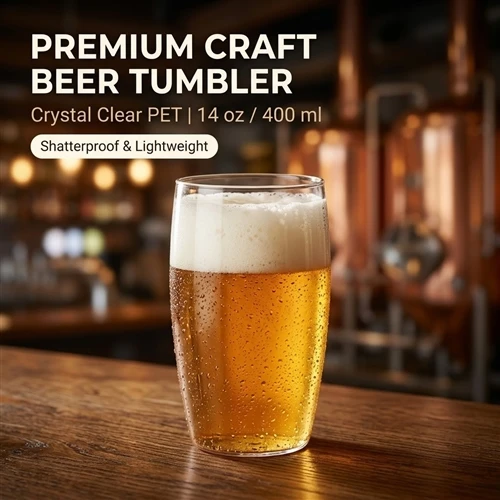
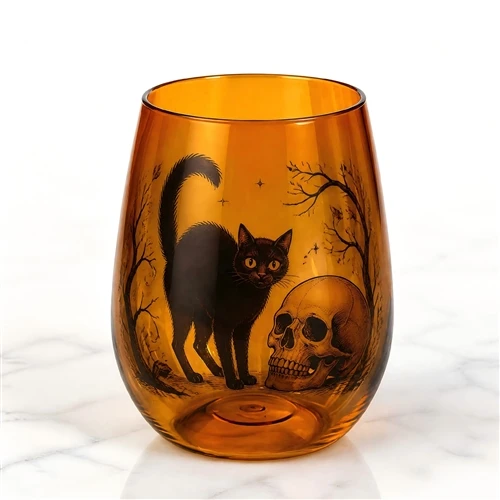
Halloween settings reward clarity and distinctive shapes. Clear plastic wine glasses and clear plastic beer glasses let the color of punch, mulled wine, or specialty cocktails show through, which works well with both elegant and playful décor. Textured or colored options can add atmosphere, but transparency remains the most versatile choice for mixed drink menus.

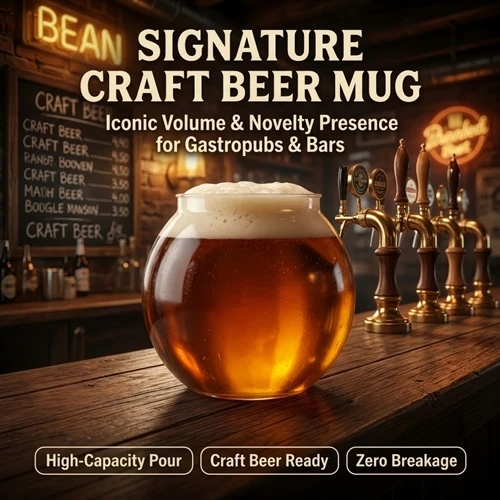
Specialty shapes also play a role. A fish tank style plastic beer glass (or similar novelty designs such as the Funny Plastic Beer Glass Top) creates visual interest at themed bars or creative beverage stations. It is not a substitute for a classic wine glass; its volume, balance, and drinking experience differ. Buyers should match cup style to the actual beverages being served rather than selecting purely on looks.
Customization options such as logo printing, gold or silver rims, or seasonal packaging can improve retail presentation and brand recall. The decision sequence is important: first define the drink types, guest profile, and display environment, then select the cup form, material, and decorative details that fit those requirements.
Relevant product ranges include standard plastic wine glasses, clear plastic beer glasses, plastic champagne glasses, and specialty beer styles suited to themed events.
Durability and Material Selection: PET, Tritan and Other Options
Material choice affects clarity, weight, impact resistance, heat tolerance, and cost. PET is widely used for party drinkware because it offers good transparency and is relatively economical for single-use or limited-reuse occasions. Tritan provides higher durability and better long-term clarity for applications where glasses may be washed and reused across multiple events. Other materials such as PLA may be considered when specific end-of-life claims are required, but disposal conditions must be verified for the target market.
Claims such as "reusable," "shatter-resistant," or "dishwasher-safe" are not automatic. They depend on wall thickness, rim and base design, connection points (for stemware), and actual use conditions. Packaging must also protect the product during ocean or air freight so that clarity and structural integrity survive transit.
Buyers should request material specifications, food-contact documentation, and physical samples. The U.S. Food and Drug Administration maintains an inventory of food-contact substances listed in 21 CFR; authorization is specific to substance identity, intended use, and conditions of use. A general "food-grade" or "BPA-free" statement is not sufficient on its own. Testing samples for drop resistance, stackability, and shipping protection reduces the chance of field failures.
For more details on materials commonly used in PET plastic drinkware, review the product specifications and supporting documentation available from the manufacturer.
Cost Control: Compare Total Purchasing Cost, Not Just Unit Price
Unit price is only one component. Tooling or mold fees (when custom shapes are required), logo printing, packaging materials, inland and ocean freight, duties, inspection, and potential claims for damaged goods all contribute to the final figure. Higher minimum order quantities often lower the per-unit product cost but increase inventory risk. Lower-priced items that arrive damaged or fail compliance checks can cost more overall.
A simple way to compare options is to calculate landed cost per saleable unit:
- Landed Cost per Unit = (Product Cost + Packaging Cost + Freight Cost + Duties + Other Costs) ÷ Saleable Units
Standard shapes with efficient packaging usually deliver better total economics than highly specialized designs unless the specialty item commands a clear price premium or unique marketing value. Custom logo and packaging work should be evaluated against the expected sales lift and brand requirements.
Factories that offer both standard and OEM/ODM custom logo plastic drinkware capabilities can help buyers consolidate requirements and reduce coordination overhead.
Regulatory Changes and Sustainability: What Importers Need to Check
Regulatory expectations continue to evolve. The EU Packaging and Packaging Waste Regulation (Regulation (EU) 2025/40) has applied since 12 August 2026. It addresses packaging composition, recyclability, reuse, labeling, and related obligations. Specific duties depend on the packaging type, product, and applicable articles; the regulation does not automatically ban plastic drinkware itself.

Eurostat data for 2023 show that EU residents generated an average of 35.3 kg of plastic packaging waste per person, of which 14.8 kg was recycled. These figures illustrate the broader context in which packaging design and material choices are scrutinized, but they do not dictate individual product decisions.

In the United States, FDA food-contact substance authorizations remain the primary reference for materials that contact food or beverages. In England, single-use plastic restrictions apply to certain items such as plates, cutlery, and expanded polystyrene food and drink containers; the rules are category-specific and include defined exemptions. Drinkware itself is not uniformly prohibited.
Buyers should separate requirements that apply to the cup from those that apply to its packaging and labeling. A practical step is to maintain a compliance checklist covering target market, intended use, material declarations, test reports, and labeling before production begins. Suppliers should be able to supply documentation that matches the exact materials and conditions of use.
How Buyers Can Reduce Halloween Procurement Risks
Clear specifications early in the process reduce later friction. Define capacity, material, clarity targets, logo requirements, packaging format, and quantity ranges before requesting quotations. Evaluate samples for transparency, volume accuracy, structural integrity, nesting or stacking behavior, and how well the packaging protects the product.
Production and shipment controls-pre-production samples, in-process checks, and pre-shipment inspection-catch problems before goods leave the factory. Align order quantities with sales forecasts and build a modest safety buffer that reflects lead times and historical variability. Confirm quotation validity periods, payment terms, and delivery terms in writing.
Manufacturers experienced in OEM/ODM plastic drinkware, logo application, and packaging customization can support this process by integrating design, production, and documentation under one roof, which simplifies coordination for seasonal programs.
FAQ: Common Questions About Halloween Plastic Drinkware
What type of plastic wine glasses works best for Halloween parties?
Clear PET or Tritan styles that show drink color work well for most themes. Match capacity and shape to the beverages served, and confirm impact resistance for crowded indoor or outdoor settings. See available plastic wine glasses.
Are clear plastic beer glasses suitable for themed events?
Yes. Their transparency highlights colored drinks and pairs easily with Halloween décor. They are often chosen for casual bars and high-volume service where breakage risk must be minimized. Explore clear plastic beer glasses.
What is a fish tank style plastic beer glass used for?
It is typically used for visual impact at themed bars, creative cocktails, or display stations. Volume and balance differ from standard wine glasses, so it should be selected for specific beverage concepts rather than as a universal replacement. One example is the Funny Plastic Beer Glass Top.
How can importers reduce the cost of bulk plastic wine glasses?
Focus on total landed cost rather than unit price alone. Optimize order quantity against inventory risk, choose efficient packaging, and evaluate standard shapes before commissioning custom tooling.
What compliance documents should buyers request from suppliers?
Material specifications, food-contact declarations aligned with target-market rules (such as FDA inventory listings for the U.S.), test reports relevant to intended use, and packaging-related documentation where required by regulations such as the EU PPWR.
How early should buyers place orders for seasonal drinkware?
Allow enough time for sampling, production, quality checks, and ocean or air transit so that goods arrive before peak selling or event windows. Many buyers begin planning several months ahead of Halloween.
Conclusion: A Smarter Way to Source Seasonal Drinkware
Successful Halloween drinkware procurement balances visual appeal, real durability, total cost, packaging efficiency, and regulatory readiness. Start with clear product and market requirements, evaluate samples thoroughly, calculate full landed cost, and verify documentation before committing to volume.
Shenzhen Hongrun New Material Technology Co., Ltd. supplies plastic wine glasses, beer glasses, champagne styles, and related drinkware in PET, Tritan, and other food-contact materials, with OEM/ODM, logo, and packaging options. Review current product ranges or request samples and quotations to match your seasonal program.

References
National Retail Federation (NRF). NRF Halloween Survey Shows Consumer Spending Expected to Reach $13.5 Billion. https://nrf.com/media-center/press-releases/nrf-halloween-survey-shows-consumer-spending-expected-to-reach-13-5-billion
Used for: 2026 Halloween consumer spending forecast and related shopping behavior insights.
Eurostat. Plastic packaging waste in the EU: 35.3 kg per person. https://ec.europa.eu/eurostat/web/products-eurostat-news/w/ddn-20251022-1
Used for: 2023 EU plastic packaging waste generation (35.3 kg per person) and recycling (14.8 kg per person) figures.
European Commission - Directorate-General for Environment. Information on the Packaging and Packaging Waste Regulation (EU) 2025/40 application from 12 August 2026.
Used for: Timing and general scope of PPWR packaging requirements.
U.S. Food and Drug Administration (FDA). Inventory of Food Contact Substances Listed in 21 CFR. https://www.fda.gov/food/packaging-food-contact-substances-fcs/inventory-food-contact-substances-listed-21-cfr
Used for: Reference to authorized food-contact substances and the importance of matching intended use and conditions of use.
UK Government. Single-use plastics bans and restrictions. https://www.gov.uk/guidance/single-use-plastics-bans-and-restrictions
Used for: England-specific single-use plastic restrictions and the need to check product category, design, and exemptions.
EUR-Lex / European Union Law. Regulation (EU) 2025/40 and related guidance documents.
Used for: Further verification of PPWR provisions and application timing.