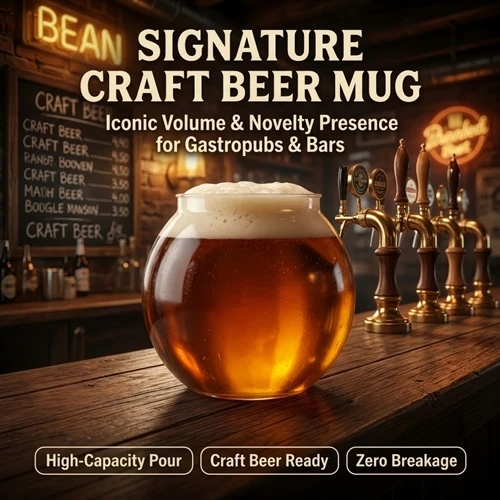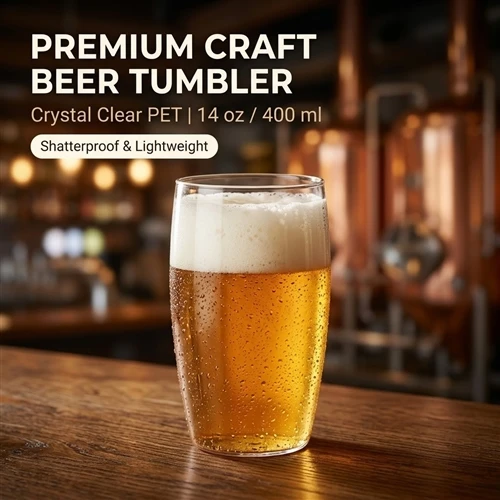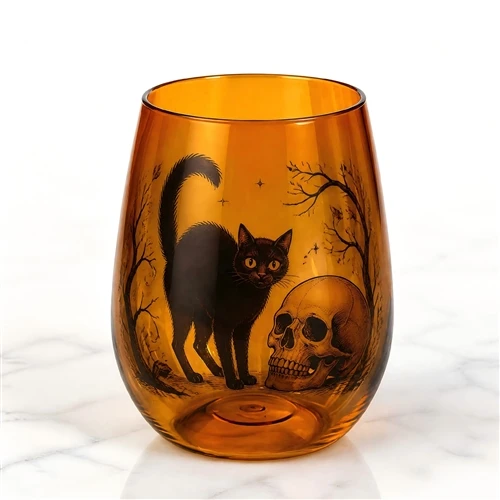

Plastic drinkware has developed beyond basic disposable cups. Depending on the material and manufacturing process, modern plastic drinkware can combine clear appearance, practical durability, and flexible customization. Products such as an 18oz plastic beer mug illustrate how plastic drinkware can serve outdoor events, casual dining, parties, and commercial beverage service where breakage is a concern.
An 18oz Curved Clear Plastic Beer Mug is another option for buyers seeking a generous serving capacity and a curved, transparent design. However, it is important to distinguish between different plastic materials: not every plastic mug offers the same clarity, impact resistance, heat tolerance, or cleaning requirements.

1. Material Differences Between Shatter-Resistant and Traditional Wine Glasses
Traditional wine glasses are commonly made from glass or crystal glass. Their transparent surfaces allow drinkers to observe a wine's color and clarity, while carefully designed bowls and rims support a refined presentation. Glass is also nonporous and generally does not interact significantly with wine under normal serving conditions, helping preserve its original flavor and aroma.
Shatter-resistant wine glasses may be manufactured from several different materials, including Tritan copolyester, other food-contact plastics, silicone, or stainless steel. These materials do not share identical properties, so the choice should reflect the product's intended application.
Tritan copolyester is particularly relevant to buyers looking for transparent, reusable drinkware. According to Eastman, the material is designed to offer clarity, impact resistance, and durability. Drinkware made from suitable Tritan formulations can also be dishwasher-safe, subject to the manufacturer's product specifications. These characteristics make it a practical option for applications where glass breakage is undesirable.
By contrast, PET drinkware is often selected for lightweight, clear beverage cups, particularly for cold drinks. Its performance depends on the specific product design, thickness, and intended use. Buyers should not assume that every PET cup can withstand high temperatures or repeated commercial dishwasher cycles.
The same principle applies when sourcing an 18oz plastic beer mug. Material specifications should be confirmed before purchase rather than inferred from the product's transparent appearance.
For B2B buyers, a useful evaluation checklist includes:
- Material identification: Confirm whether the product is made from Tritan, PET, or another polymer.
- Food-contact compliance: Request documentation applicable to the intended market and beverage use.
- Temperature limitations: Verify whether the product is suitable for cold drinks only or for a broader temperature range.
- Cleaning requirements: Confirm whether handwashing is required or whether the specific product is dishwasher-safe.
- Product construction: Review wall thickness, rim design, handle attachment, and overall stability.
For further material information, see Eastman's official Tritan drinkware overview.
2. Durability and Suitable Applications
One of the biggest differences between traditional glassware and shatter-resistant drinkware is how they respond to accidental impact.
Glass is rigid but can break when dropped or struck against a hard surface. Broken glass may create sharp fragments, requiring immediate cleanup and potentially interrupting service. This makes traditional wine glasses well suited to controlled dining environments but less convenient in locations where accidental drops are more likely.
Shatter-resistant plastic drinkware is designed to reduce this risk. Although a plastic cup may still become scratched, deformed, or damaged under certain conditions, suitable materials can tolerate everyday impacts better than conventional glass.
Consider a practical example: an outdoor catering company serves wine and beer at a garden wedding. Staff must transport drinkware between preparation areas, tables, and outdoor seating. Guests may move around on grass, paving, or decking, where a dropped glass can be difficult to manage safely.
Using appropriate shatter-resistant drinkware can reduce the likelihood of breakage during these activities. The business must still consider product appearance, cleaning procedures, and customer expectations, but avoiding broken glass can simplify operations.
Similar considerations apply to an 18oz plastic beer mug used at barbecues, festivals, poolside gatherings, and casual events. A curved, clear design allows the beverage to remain visible while providing an alternative to conventional glass beer mugs.
For distributors, event suppliers, and hospitality buyers, durability should be evaluated as part of the total cost of ownership. The purchase price is only one factor. Replacement frequency, handling requirements, packaging, storage, and breakage-related interruptions may also affect the overall cost of supplying drinkware.
Importantly, shatter-resistant does not mean indestructible. Buyers should request relevant impact-test information when performance under specified conditions is essential.
3. Price Differences and Total Cost of Ownership
The price difference between glass and plastic drinkware depends on material grade, manufacturing method, design complexity, order quantity, and branding requirements.
Basic glass wine glasses can be economical for restaurants and retailers purchasing standard designs. Premium crystal glassware may cost considerably more because of its material, finishing, craftsmanship, and brand positioning.
Plastic drinkware also covers a wide price range. Simple cups may have a relatively low unit cost, while high-quality reusable products with clear finishes, specialized shapes, handles, or customized decoration may require greater investment.
For commercial buyers, comparing unit prices alone can lead to an incomplete decision. A more useful approach is to evaluate the expected cost over the product's service life.
For example, a catering company comparing two drinkware options should consider:
- Initial purchase cost per piece.
- Expected replacement frequency.
- Cleaning and handling labor.
- Storage and transportation requirements.
- Custom printing or branding expenses.
- The consequences of breakage during service.
These factors should be assessed using actual supplier quotations and operational records rather than assumed savings.
When purchasing an 18oz plastic beer mug, wholesalers should also compare minimum order quantities, carton dimensions, packing methods, lead times, and sample availability. An 18oz Curved Clear Plastic Beer Mug with a distinctive shape may suit promotional campaigns or event supply programs, but its commercial value depends on whether the design matches the buyer's target market and price positioning.
For OEM and ODM projects, buyers can additionally evaluate logo printing, packaging customization, and repeat-order consistency. These factors can help differentiate a private-label product from standard market offerings.
4. Taste and Drinking Experience
Traditional glass and crystal glassware remain popular because they offer a familiar drinking experience and a refined presentation. Glass is generally nonporous, and its surface does not normally retain beverage flavors or odors when properly cleaned.
Wine enthusiasts may also prefer particular bowl shapes and rim profiles because they influence how wine is presented and experienced. For premium wine tasting, the shape, thinness, and balance of a glass can matter as much as its material.
Plastic drinkware offers a different set of advantages. It is often lighter and easier to handle, making it convenient for outdoor activities, casual gatherings, and busy service environments. However, the drinking experience depends on the material quality, rim thickness, shape, and overall construction.
Lower-quality plastic products may scratch more easily, retain odors after improper cleaning, or feel less refined than glass. Some designs may also have thicker rims that create a noticeably different sensation when drinking.
These differences do not mean that all plastic drinkware affects beverage flavor. Material selection and product quality matter. Eastman describes Tritan drinkware as resistant to retaining tastes and odors, although individual products should still be evaluated according to their specifications and cleaning instructions.
An 18oz plastic beer mug is generally better assessed for beer service, casual entertaining, and larger beverage portions than as a direct replacement for every specialized wine-tasting glass. Its capacity and shape may suit beer, cider, or other permitted cold beverages, depending on the product's intended use.
For buyers selecting an 18oz Curved Clear Plastic Beer Mug, a physical sample can help assess the rim, grip, balance when filled, transparency, and perceived quality before placing a bulk order.
5. Appearance, Transparency, and Product Design
Traditional glass and crystal wine glasses are valued for their visual refinement. Their transparency, thin rims, and carefully proportioned bowls can create an elegant presentation for restaurants, wine bars, hotels, and formal dining occasions.
Plastic drinkware has a different design profile. Depending on the polymer and molding process, it can provide clear, glass-like aesthetics while allowing more flexibility in shape, wall construction, and decoration.
Tritan is known for its clarity, while other plastics may offer different balances of cost, rigidity, transparency, and impact resistance. Scratching, surface haze, molding marks, and rim finishing can influence the final appearance.
For B2B buyers, visual quality should be checked against the intended retail or hospitality positioning. A premium venue may prioritize a refined rim and a lightweight, balanced feel. A festival organizer may place greater emphasis on impact resistance, easy handling, and efficient replenishment.
An 18oz plastic beer mug can be designed with a practical handle and a generous body, while an 18oz Curved Clear Plastic Beer Mug emphasizes a curved silhouette and visibility of the beverage. The actual appearance and handling characteristics should be confirmed from the supplier's product sample and technical specifications.
Customization can provide further commercial value. Depending on the manufacturer's capabilities, buyers may be able to request printed logos, branded packaging, or other decoration options. Before approving a design, they should confirm print durability, artwork requirements, color consistency, and whether customization changes the price or lead time.
6. How Should B2B Buyers Choose the Right Drinkware?
There is no single material that is ideal for every application. The best choice depends on the relationship between product performance, budget, appearance, and the operating environment.
Choose traditional glass or crystal glassware when:
- Premium wine presentation is the main priority.
- A thin rim and a traditional wine-drinking experience are important.
- The service environment allows careful handling and storage.
- The business is prepared to manage breakage and replacement.
Consider shatter-resistant plastic drinkware when:
- Products will be used outdoors or in busy service areas.
- Lightweight handling is an advantage.
- Reducing glass breakage is an operational priority.
- Branded products are needed for promotions, events, or private-label distribution.
Before placing a bulk order, verify:
- Material and food-contact documentation.
- Capacity and product dimensions.
- Intended beverage and temperature range.
- Washing and reuse instructions.
- Available colors, logo options, and packaging.
- MOQ, production lead time, sample availability, and shipping arrangements.
For example, a distributor sourcing an 18oz plastic beer mug for summer events may prioritize lightweight handling, a clear finish, and reliable bulk supply. A retailer developing an 18oz Curved Clear Plastic Beer Mug product line may additionally focus on packaging presentation, shelf appeal, and brand differentiation.
These are illustrative purchasing scenarios, not claims about specific customer results. Actual product performance and commercial suitability should be verified through samples, documentation, and supplier discussions.
Frequently Asked Questions
1. Are shatter-resistant wine glasses completely unbreakable?
No. Shatter-resistant drinkware is designed to reduce the risk of breakage, but it can still be scratched, cracked, or damaged under certain conditions. Performance depends on the material, design, impact conditions, and product quality.
2. Do plastic wine glasses affect the taste of wine?
Not necessarily. The effect depends on material quality, surface condition, cleaning, and product design. Properly manufactured food-contact drinkware should be selected according to the intended beverage and applicable requirements. Glass remains a popular choice for traditional wine tasting.
3. Is every clear plastic beer mug dishwasher-safe?
No. Dishwasher suitability depends on the specific plastic material and product construction. Some Tritan drinkware is designed for dishwasher use, whereas many PET products are not. Always follow the manufacturer's cleaning and temperature instructions.
4. What should buyers check when sourcing an 18oz plastic beer mug?
Confirm the actual capacity, material, dimensions, wall construction, food-contact documentation, cleaning instructions, MOQ, lead time, and packaging details. Requesting samples is a practical way to evaluate transparency, grip, balance, and finish before committing to a bulk purchase.
5. Is an 18oz Curved Clear Plastic Beer Mug suitable for commercial use?
It can be suitable for applications such as outdoor events, casual dining, promotional programs, and selected hospitality settings, provided the product's material and performance meet the intended requirements. Buyers should confirm durability, reuse instructions, cleaning suitability, and local food-contact requirements before commercial deployment.
Conclusion
Shatter-resistant wine glasses and traditional glassware serve different priorities. Glass offers a familiar drinking experience, refined presentation, and excellent transparency. Suitable plastic drinkware can provide lighter handling and a lower risk of shattering, making it useful for outdoor activities, events, and selected commercial applications.
For B2B buyers, the right decision should be based on material specifications, actual product performance, intended use, and total operating cost-not simply on whether a cup is marketed as unbreakable.
Products such as an 18oz plastic beer mug and an 18oz Curved Clear Plastic Beer Mug can be practical options for buyers seeking clear, convenient beer drinkware. By checking samples, compliance documentation, customization options, and supply conditions before ordering, distributors and hospitality suppliers can make more informed purchasing decisions.
References
Eastman, Tritan for Drinkware
Eastman, Frequently Asked Questions About Tritan
UK Food Standards Agency, Alternatives to Single-Use Plastics